Tuesday, November 1, 2011

Halloween Preparations

Halloween, to Christians, is a pagan holiday. Because of this, some refuse to celebrate it. When our children were young, it was a greatly debated subject. I had a tug-of-war war within myself as this holiday often brings out the dark side of people. But then so can Christmas as the greedy use it to fill their own coffers.

As I've wondered about the holidays, I've come to realize that a holiday is what you make of it. You can choose how and what you celebrate despite what the world pressures us to do.

With this in mind, we set rule for Halloween for our family when they were small. No costumes that represent evil.  Just as an actors dresses the part to help them get into character, children do the same thing as they explore roles. Dress determines to a great degree how one acts. It's a proven fact and the reason behind school uniforms.

Evil, is not a role I wished my children to explore especially since they don't have the capability to fully compartmentalize. The lines between fantasy and reality are thin and they can easily be influenced. 

For  me, the goal of a holiday is to gain a sense of belonging, emotional warmth, growth, and learning to to be more self-less. 

I've discovered that the holidays is where the selfless shine and the sins of the selfish become more visible.     

Holidays create a measuring rod for myself.
They push me into the uncomfortable as I do things for others. Like the debate I had in the store about what paint to buy that would stick on the shell of a pumpkin. I read this label and that label and none of them gave me a clue. As my stomach began to twist in discomfort, over such a silly thing, I decided it was ridiculous, threw my hands in the air and just bought two different kinds. Surely, one of them would work. If not we'd try markers.

I know traditionally, we've always carved pumpkins, our oldest helped with her first one when she was two. But this year, our oldest grand daughter complained that scooping out the insides with your hands is just really yucky. One has to be flexible with traditions, so this year painting it was. 
We had chicken noodle soup and biscuits and the minute the kids were done, they disappeared. We could hear a dresser drawer in our room opening. We had to smile knowing what they were up to.  They returned with one of Papa's work t-shirts on. Papa's t-shirts make a good cover up for their clothes.
Out came the paints and our daughter's nerves, just shy of wringing her hands. Oh wait, she was wringing her hands. Despite this, the girls had a wonderful time, painting their pumpkins and a cazillion pictures on plain white paper. The decorating of sugar cookies was almost ignored, they were having so much fun. When bed time loomed near, we had to force them, despite the flowing tears, to quit and go home to bed.  

Next week, we will cook the pumpkins, make salted pumpkins seeds to eat and pies, cookies etc. Jack-o-lanterns have never been the end at this household.
Monday was also dress up and parties at school.

Making part or all of the costumes is a large portion of the anticipation of the holiday. It is a creative learning experience. Granted, more for me than the children but still, they learn as they watch and help with the decision making. Looking around at in expensive household objects, and seeing how they can be used to create a fantasy attire expands their minds. When they are older, more of the project will become theirs.

I admire some friends who spent sixteen hours with their ten or is it eleven year old son creating a Transformer costume out of cardboard, Wow, it was quite impressive! Pretty much just cardboard and lots of tape. Some would say what a waste of hours. I couldn't help but think of all the things their son learned, designing, following plans, using math, the importance of precision, and a score of other character building principle, not to mention learning to stick with a project until it is completed even though it takes a long time. Halloween, for them, went way beyond dressing up. 
For our middle grand daughter, we just added a few things such as a net collar and some whimsical antennas to her boughten attire. Her mom painted her face and added glittery hair spray. You can tell she is pleased with the results.
But for our oldest, who at first wanted to be a Clam, (yes, folks, a clam but luckily changed to Velma on Scooby Doo), I had to try and remember how to make a skirt from measurement only. I gave up and hit the Internet. After all our youngest, (a boy)  is 26 and he definitely didn't need a skirt, though he has been tempted to buy a kilt, testing out his Scottish roots. It was his older sisters and myself that I made skirts for, from measurements. That was a long time ago.

I found a pretty good tutorial on the Internet but not quite the way I'd done it before. After ripping out the skirt a few too many times for my comfort, trying to get it to work, I got it put together. Not as smooth a finish as I'd like but I've got the hang of it now and am going to make a few more especially since I remember how I did it long ago. Maybe as part of Christmas gifts but, we'll talk about that later.

The rest was of the costume was simple. As for our youngest, she didn't care what her costume was like since she KNOWS she's the cutest thing ever so we didn't do much to it.

For kids, isn't that what dressing up in a costume is about, adventure and feeling good about themselves? When they are small, I'll guarantee they don't pay much attention to what others are wearing. That is unless they feel their costume is way below par.

So despite the work, stress caused stomach aches that sent me hurriedly to the bathroom over the whole deal (yes, it is hard on this Autistic Gramdma), it was worth it. I had only to look at the ecstatic joy in their eyes and listen to the "Grandma, I love you!!!" said with emphatic heart felt assurance to know that they have no doubt of the love we have for them.  

Our children have often voiced that they had a wonderful childhood. I swear we celebrated almost every single holiday. Green mash potatoes and the like on Saint Patricks Day, creating paper May Day baskets filled with cookies on May Day, etc. etc. etc.

 I'll guarantee our kids knew the holidays and why they were celebrated. Not because of tradition but my longing for the power a holiday can have to bind a family together. 

 Sometimes the lack of creates a want but I've observed this is only in those with a driving character. Unfortunately, most who have done without just continue on with the doing without, think welfare. Traditions, good or bad, are powerful and live on.

 It may be the role of parents to use holidays to teach and bind their families, with grand parents playing a supportive role, but if they fail in this duty, despite encouragement, the responsibility lies with us the grandparents to do as much as possible.  It's a great love that drives us forth to give, teach, and bind.
Our step-grandson was at his mothers and wasn't around until Halloween night. We missed helping him create a costume and paint a pumpkin. Hopefully, we will be able to have the opportunity, next year.  

Monday, October 31, 2011

Corn Bread From Home Ground Corn

My oh my, what kind shall I choose? The sweet corn dried like field corn or the Painted Mountain corn? I gave up and decided it would be a good opportunity to grind both kinds and make two batches of corn bread to test them side by side in a taste test.

We had a church Halloween party Saturday night and I could take both 9 inch square pans of corn bread for my contribution to the chili meal. That way Kirk and I wouldn't have to try and eat two pans. Something I know we'd never get done. This way we could try both and share the rest.
 I was curious to see what the Painted Mountain corn meal would look like since the kernels were of so many different colors. It was hearty and healthy looking.
The sweet corn variety looked traditional. Much like that at the store but with a far moisture feel and look. I've used this corn last year when I first tried drying sweet corn on the cob and shelling it for corn meal. It's a good way to use those not so pretty ears of corn. Just leave them in the garden to dry on the stalks. Then remove and let finish drying hanging up or on newspaper in a dry, warm place. If using newspaper, be sure and turn the corn on occasion to insure all sides dry evenly.
The Painted Mountain corn bread dough was easy to distinguish with its red and black flakes. It looked like I'd spiced it with herbs.

The sweet corn dough I've learned to not add as much sugar because the corn is naturally high in sweetener. Since my corn bread recipe is amazingly moist but tastes more like cake, I'm going to work on dropping the sugar level until it tastes a bit more bread like but I don't want to loose the moistness. Not sure if the sugar will effect that in any way. I couldn't find out the answer on the Internet.

There is no doubt which corn bread is higher is nutrients. Hands down, the Painted Mountain corn bread. Remember, the dark kernels have more anti-oxidants than blue berries and the vitamin levels are very high in this variety.
It's one of the reasons I choose heirloom seeds varieties. Our ancestors were all about survival. Fields that once grew 75 bushel now grow 150 bushel but the corn is significantly lacking in vitamins. It's no wonder the world has super sized it. You know, made the servings much larger. It takes that much to get the same amount of nutrients that you received in a small portion when our great grand parents were alive.

Some times, less is really more. So though this sweet corn, corn meal is really tasty, the Painted Mountain corn was only slightly less sweeter and held a healthy punch of nutrients. Hands down, the Painted Mountain corn stays. Now if only I can get my sweet corn and Painted Mountain corn to tassel at different times, I'd be really happy.

 The plan is to try and put the Painted Mountain corn in three weeks ahead of the sweet corn. Last year I did it the opposite way and they tasseled at the same time. Either the Painted Mountain corn matures faster. (It's known to be pretty cold hardy.) Or the weather and amount of light is the main determining factor in tasseling. I'll have a better idea by the end of next summer.

If weather is the factor then I'll have to rotate the years I grow one kind and then the other. I've not got the space to keep them from wind pollinating each other as they did this past summer. Alas, some day it would be grand to have a larger place.

 Now I want to add Painted Mountain corn meal to my regular bread to increase the nutrient levels. Maybe I'll give corn meal pancakes another try too.

When you order seeds next year, keep Painted Mountain corn in mind. It's a good addition to your garden.

Wednesday, October 26, 2011

Story Time

 If you are taking your two year old grand daughter to story time and they are celebrating Halloween, be sure and put on your Super Women underwear. You'll need it.
 Doesn't matter if you haven't sugared her up because she's going to be on the floor.
 ...inside the shelving, out to get a drink, flopping in your arms,
 and even doing her most disgusting habit( the one you've been trying to get her to stop doing for weeks) sticking one finger in her nose as she sucks her thumb.
You may of thought story time at the library was for children but really it is an exercise program for adults just disguised so there will be more participants. Yup, I've had my advanced aerobics today . LOL 

Monday, October 24, 2011

Disappearing Bees Question

I received a question in response to my Disappearing Bees blog that made me hit the Internet for the answer. This is the question.

Does GM affect bees in any way? Just wondering. Interesting article.
Naturally Carol

Carol, you will find an excellent article at the below website which answers that question very well along with others posed with the Colony Collapse Disorder problem in bees.

I've included a couple paragraphs to peak your interest.
[Genetically modified seeds are produced and distributed by powerful biotech conglomerates. The latter manipulate government agricultural policy with a view to supporting their agenda of dominance in the agricultural industry. American conglomerates such as Monsanto, Pioneer Hybrid and others, have created seeds that reproduce only under certain conditions, often linked to the use of their own brands of fertilizer and/or insecticide. These seeds are genetically engineered to produce only infertile seeds, which farmers cannot replant, also to mention that the bees that are trying to collect pollen, found to have their digestive tract diseases, such as amoeba and nosema disease”12. These diseases are mainly located in the digestive tract system. After studies of the autopsy, the most alarming trait is that the lower intestine and stinger have discolored to black vs. the normal opaque color, Synominus with colon cancer in humans.

The genetic modification of the plant leads to the concurrent genetic modification of the flower pollen. When the flower pollen becomes genetically modified or sterile, the bees will potentially go malnourished and die of illness due to the lack of nutrients and the interruption of the digestive capacity of what they feed on through the summer and over the winter hibernation process.


Terminator Seeds   Lastly, “leaked documents seen by the Guardian show that Canada wants all governments to accept the testing and commercialization of “Terminator” crop varieties. These seeds are genetically engineered to produce only infertile seeds, which farmers cannot replant, also to mention that the bees that are trying to collect pollen, found to have their digestive tract diseases, such as amoeba and nosema disease”12. These diseases are mainly located in the digestive tract system. After studies of the autopsy, the most alarming trait is that the lower intestine and stinger have discolored to black vs. the normal opaque color, Synominus with colon cancer in humans.]
     

In other words, lets kill off the bees and sell to farmers seed that won't produce another crop so they have to come to the company once more. Control, greed, seeking of wealth, plain and simple, that's what it is.

Sunday, October 23, 2011

Calundula Flower Infusion

 Just a few blossoms left on the new patch of Calundula flowers. I threw some seeds in from the front yard early this year, the flower bed I got rid of, and I've waited until now to pick them. I wanted to make sure the ones in the back yard had lots of seeds to fall to the ground and to re-sprout next spring. This flower is a hardy, frost resistant plant giving me a feeling of sunshine when almost everything else is dead and gone. 

I've used this flower blossom dried in soap since it is great for soothing the skin. This winter I want to make a few different recipes of lip balm and Calundula would be a great addition.

So I did a Calundula flower infusion in olive oil, a common ingredient in lip salves. I came across instructions for several ways to make the infusion. One in a crock pot, one the sun tea method, and one on the stove top.

I had only a few flowers and knew with so little, it would burn in the crock pot. The sun isn't very powerful at this time of the year to use the solar method. That left cooking it on the stove. Not easy to keep the heat down low enough with only a cup of olive oil, just enough to cover the flowers. So I turned the stove on and let it heat up and turned it off, and turned it on, and turned it off again.
When done, I strained the flowers off through my milk strainer, using a milk straining pad. You could use cheese cloth. What was left was a lovely green liquid. 


I put the pint jar of fluid in the back of my refrigerator and it may sit there for a month before I get around to ordering the other things I need to make salves. But as they say, "Make hay while the sun shines." and I had calundula flowers to pick. After Tuesday when snow is fore casted, that may not be the case.


What's your favorite lip balm ingredient?  

Thursday, October 20, 2011

Disappearing Bees


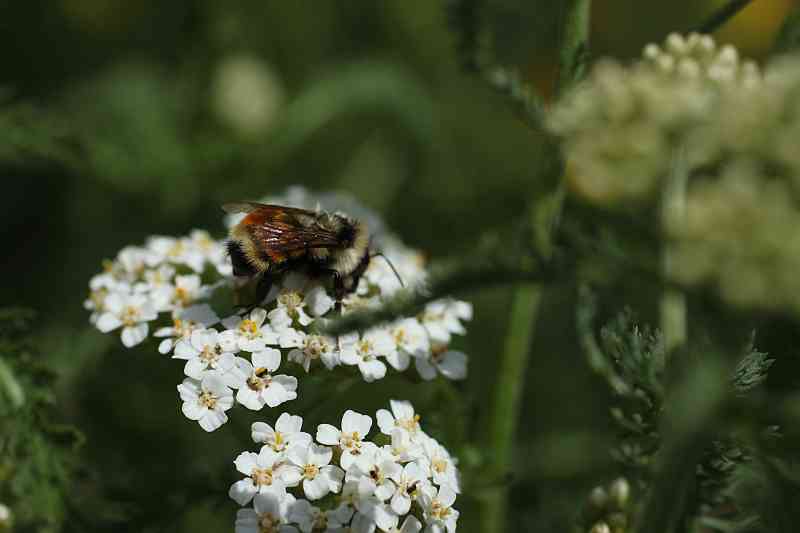
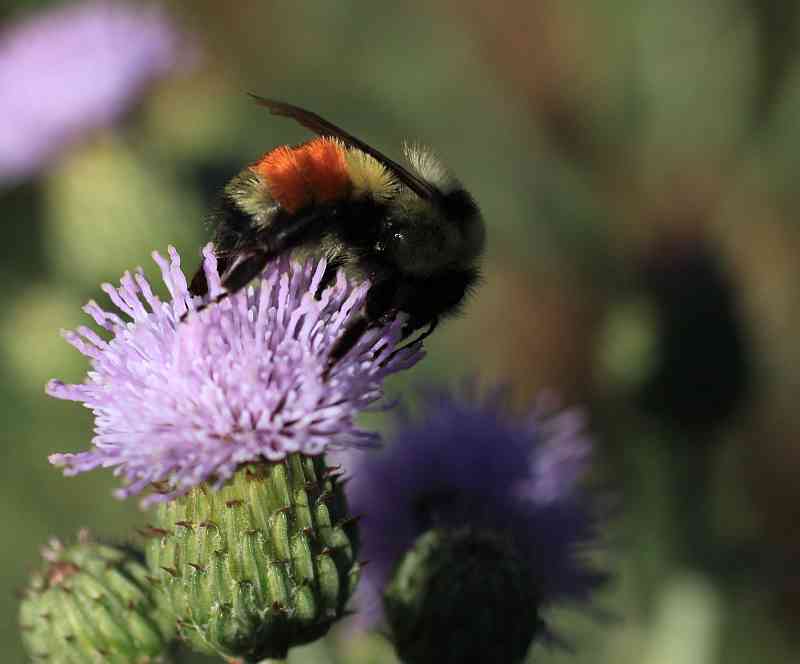
(Pictures are all furnished by yours truly of various kinds of bees.)
I promised to talk a tad bit about Colony Collapse Disorder. I watched a very fascinating film called Vanishing of the Bees by Ellen Page on Netflix. The CCD problem is complicated, making the process of getting the attention of the USA government difficult. Especially since it is more interested in money and power than balancing anything like the environment. I'm not talking about using corn as a fuel, which has caused a huge imbalance, drastically increasing livestock feed prices, diverting fields that would have grown another food crop to growing corn, which is responsible in part of dramatically increased food prices in the grocery store.

Not to mention that it takes more energy to manufacter the corn based fuel than what it creates. And the wind power causes some serious problems to the environment also. Yes, money is the root of the movement, not saving the environment. Not that these things don't have some promise. We are just jumping the gun on mass production and looking to them as our savior to the mess we've gotten ourselves into with our greedy waste.

Money and power, it's what gets things done. So it isn't any surprise that the Environmental Protection Agency has ignored and failed to react to what appears to be the base cause of CCD or Colony Collapse Disorder. They are going to continue to base their belief that the systemic pesticide is a blessing and poses no real threat to honey bees based on the manufacturers testing. They proved that adult bees exposed for three days to the pesticide were fine.
Of course a bee only needs to eat three days out of every year (lie) or is it that a little bit is okay so a lot is also. You and I both know that's a bunch of bull. What about the young? They like any other young are more vulnerable to such things but they were never tested.  

If things keep on course, the loss of 1 in 3 hives effected by the disorder and in some areas the 44% loss of hives will mean a huge decrease in crop production. I've heard that in some areas, they are already hand pollenating things such as almond trees. And what about the bee keeper? He will be out of a job. Some bee keepers with vast amount of hives are now refusing to take their bees to fields that have been sprayed with the pesticide. They can't afford it and bee keepers, like myself, have a real affection for their bees or they wouldn't be doing it. I'll guarantee, it isn't the money. Bee keepers don't make much.
So what's the big deal? What if we loose our bees and other pollinators? Well, we wouldn't have to worry about what's for dinner. There wouldn't be many choices. The grocery store shelves would be bare. No fruit-- no vegetables, just grain. They are safe since they are pollinated by the wind. Keep in mind it wouldn't be just the honey bees lost, but vast numbers of other insects. Too bad this doesn't include the mosquitos or I might consider it for two seconds - at least. LOL 

Don't think this hasn't caused some serious thought for some big wigs for they have planned for a new future. One where we import all our fruits and vegetables and America becomes a grain capitol. Since less than 10% of the crops imported to America are inspected, that ought to work out real well. NOT!!!

But wait a minute, its worked out so well importing nearly all our oil. Okay, maybe no one is arguing that point but come on, can't these people make parrelel comparisons? Oh yeah, they don't care about that. If you are rich, you can live in a different world than the rest of us. 

Bee keepers and some researchers in a number of countries, feel they've found the culprit, systemic pesticides. But since our Environmental Protection Agency here in the USA doesn't do any of its own research, but depends on that which is provided by the companies vying for approval of their products, the EPA considers everything hunky dory and hence are doing nothing. Doing nothing makes certain people a lot richer.
Systemic pesticides are scary. They can't be washed off like the old kind of bug killers. So cleaning your fruits and vegetables you buy in the store to wash off the pesticides is fast becoming a thing of the past. Systemic pesticides are applied to the seed or the leaves and this pesticide becomes a part of the vascular system of the plant expressed through the pollen, nectar, and gulation droplets. It is in the fruit, not just on it. 

Worse than that, the pesticide them becomes a part of the soil to be taken up by the next crop grown. What do you bet it kills the micro-organisms also. This is the soils doctors, nutritionists, transportation system, everything that is responsible to create a healthy crop.

The insects, of course eat any part of the plant, and dies. Makes me wonder what it is doing to us. Probably lowering our days on the earth, I'd guess. How do you clear a contaminated soil to even think of growing organic after wards. Makes me think of nuclear fall out.

Testing proved that Honey bees behavior on organic blossoms was of course normal. On systemic pesticide applied plants, they acted dramatically different. Bee acted disoriented. Some even fell off the blossom.

Bee keepers don't think it is any coincidence that at the same time this pesticide was introduced to countries around the world, that CCD appeared at the same time of introduction.The direct link is a bit hazy though since it isn't CCD alone that has caused dramatic bee losses.  Exposure to this pesticide destroys the immune system of honey bees leaving them vulnerable to disease and mites which in turn also destroy them.
(healthy brood)
Interestingly, many of these hives where almost no body is home still have a laying queen inside doing a good job laying a perfectly normal brood pattern. Those of you familiar with bees know that nobody leaves the queen willingly. She is the whole hives existence and everything revolves around her. The have to go insane to abandon her and the brood, (baby bees). 

The other concern posed by the film is the emphasis on crop yields. A field that once produced 75 bushel 20 years ago, now produces 150 bushel. Progress -- I don't think so for it is much like the dairy cows of today and 20 years ago. Oh the cow produces a whole lot more milk but the cow doesn't produce any more vitamins and nutrients than she did 20 years ago. Hence, that means the milk today has significantly less nutrients and is mainly white colored water. Crops are the same, far less nutritious than they once were. This is another case where more is not better, it is just more.

And I'm not even going to attempt to talk about genetically modified seeds. It won't be long and we will have messed things up so bad we won't have anything to eat.

That is why I grow organic, heirloom varieties in my garden and am trying to learn ho to produce what we eat-- even grain -- just in case.  

So go ahead and watch Vanishing of the Bees by Ellen Page. It is VERY well done documentary. I didn't snore once.
And if you want to learn a little about pesticides check out this web-site. We all need to make a safe haven in our own backyard for the bees. If they don't survive, neither do we.  http://www.motherearthnews.com/organic-gardening/systemic-pesticides-zm0z10zrog.aspx

Tuesday, October 18, 2011

Harvesting Buckwheat

Buckwheat, a favorite of honey bees. Who can blame them? This plant flowers and flowers and flowers giving them lots of delicious food. Yes, I realize that is a fly on the buckwheat flower but they have to eat too and none of the honeybees would hold still long enough to photograph. Besides, the fly is dressed in a color coordinating outfit adding quite nicely to the picture.  
This was my second year of growing buckwheat. Last year, I planted some late in the season and it never reached the seed stage. It was a green manure project to break up some hard clay soil. It worked. I also learned that the fifty days it said on the package was not nearly long enough in our area to grow a crop to harvest, for buckwheat is not frost tolerant.

So this year, I planted early in June and harvested in late August and September a little more in early October. I threw some seed amongst part of the potato plants and under the sunflower seeds. Bad move in the potato patch since the buckwheat did well, the potatoes did not. Stands to reason since they both have extensive root systems and buckwheat is aggressive.

 Yet, under the sunflower seeds they did okay.

Before embarking on this project I hadn't done my research. now don't be so shocked. Oh, I did check out its green manure aspects but not the grain harvesting part. Bad move. But even if I had, I still would have come up short for every area is just a bit different than another because of the soil, weather, and growing season length. 

The biggy that I hadn't checked out and found out was one plant will have both blossoms and developed buckwheat seed, with the lower blossoms forming seed before the upper ones. That means you either have to harvest plant by plant when  75% of the seeds have developed or crumple off the seeds from the lower stems while leaving the plant intacked and producing seeds on the higher stems. And my plants seem to be growing at very different stages of development meaning a large group was never at 75% seed development at one time compounded by the problem that all the seeds were broad casted in a area not allowing me easy access to individual plants.

 
So the next time I plant buckwheat I'm going to do things differently. 
1. I'm going to plant in plots that I can reach across for maximum harvesting capability since I don't have room to plant a large area and harvest when the 75% of the seeds are developed if they develop in that manner.

2.I will plant when I plant my green beans to ensure a seed crop.

3. Since lots of the seeds will naturally drop to the ground before I can get them harvested, ( because this is a time consuming plant) I will plan accordingly will the crop that will follow rotation behind the buckwheat.

4. I will be growing buckwheat not as a large food storage item but as an educational project since I simply don't have enough area to get the yields necessary for a substantial amount. Now this doesn't mean it isn't worth growing. I also plan in the future to grow rye and wheat. It is so I have a very basic understanding in case it becomes necessary in the future for us to produce our grains.

You might think I'm a bit paranoid and say as many others have told me that someone will always want to grow food for us if the are paid. The truth is someone is being paid now and very few want to grow food for us. The average age of the farmers in the USA is 57 years old. That means fifty percent are older with retirement age of Americans being between 65 and 67. Eight more years for the average farmer. And fifty percent are younger with most of the farmers I know don't have children who want to take over the farm.

What would happen if in a few years we lost fifty percent of our farmers? Two things, either we would get most of our crops from other countries like we do our oil and believe me this has been talked about by huge organizations.  Or, huge companies like Kelloggs will have bought up fifty percent of our crop land. A monopoly means control. 

So... just in case, I'm learning all I can for the tough days ahead that this will all need to be sorted out.  

This year, my efforts were with buckwheat. After all, I kind of like buckwheat pancakes. I only had them a few times but they weren't bad. I think they could grow on me.

And before I go any further and possibly lead you astray, buckwheat isn't a cereal grain but a fruit seed related to rhubarb and sorrel. Kind of reminds me of wild rice which isn't really rice at all. I guess things sometimes get put into catagories of things they remind you of instead of what they actually are.
With this goal to learn to grow as much as possible of what we eat, I've added learning to cook with whole grains on a much higher level than presently. That's part of my winter goals.

So I crumbled dried buckwheat seeds and flowers into a bowl whenever I had a little time. And I scrunched the seeds, leaves, and spent flowers between my fingers now and then as the bowl sat on the kitchen counter, creating a nice crumbly mixture.
Then with our oldest grand daughter, my husband helped me to set up the box fan outside and we began the task of cleaning the fruit seed. This was accomplished by holding the bowl of seeds up high and slowly pouring it into a tub that sat on the ground while the fan, which was on high speed, blew away the light weight sticks, leaves, and spent flowers. Several times of this and what was left was pretty clean.
There is still a little bit of this and that extra in with the seed hulls that I've got to pick out but over pretty good. The task isn't done yet though, as I've still got the hulls to remove from the seeds. I've read of two ways of doing this. One way is to roll them under a rolling pin breaking the seeds away and the other is to grind them in a hand grain grinder and sifting the hull off. I'm going to try both ways to see which works best. What will remain is very little buckwheat seed to use in pancakes.

Yes, I could have harvested more if I could of kept up with all I had to do and if I had of planted the buckwheat in a more manageable plot. Do I try again next year? I'm not sure. I haven't decided for I do know I'm going to put in a small plot of rye or wheat. I'll admit, I'm a bit discouraged by this project. Time will help put it into perspective. I do know that there is much to learn with such a small gardening plot.