Tuesday, February 28, 2017

I've Discovered Cutting Celery


Photo from Jonny's Seeds , one of the seed companies I order from.
Our goal to grow as much as possible of what we consume is challenging here where the growing season is short and cool. I'm finding this challenge quite often involves doing without or finding substitutes. One area I'm working on is celery. We do not use very much and though I've come up with better ways of storing it in the refrigerator, it still wants to go bad before we've consume it. Out to the rabbits it goes. Sadly this long storage time means the celery is depleted of nutrition and so it is rather wasted. So what is the solution since there are a few dishes I really like celery in?
Photo from Johnny's Seeds -- Celeriac

As I debated this question, I looked into growing celery in our garden, since we had a friend growing it about 25 miles from us. Alas, the weather and elevation are just different enough from there to here that it is not possible without a greenhouse. Yet it did not seem wise to take up our future greenhouse space to a plant that was only edible during the harvest time. Dried celery stalks to me are hard and woody. I've tried it.

Could there be another plant that tastes like celery but would grow here? I discovered Celeriac in a seed catalogue and gave it a try a couple summers ago. Nope, the tops were lovely but there was no bulbous root by the time Jack Frost came to end the gardening season. The seed packet said 90 days to harvest but our summers are not terribly warm and the sun goes down early being next to the mountains. Those two things put together equate to needing more days than the packet recommends. I'm not completely ready to give up on Celeriac though. Whether it be this year or next I will start plants indoors first and then transplant. Maybe that will work. 

As I contemplated the what shall I substitute for celery dilemma once again, I happened to find Cutting Celery in a seed catalogue. (It is not a common thing offered.) The idea intrigued me. A celery that was grew more like parsley but had thicker stalks and an abundance of leaves. I decided to try this variety in the house under grow lights this winter. AWESOME!!! Though the stalks were smaller than the photo in the seed catalogue, it tastes wonderful. Then again the catalogues plant was grown outside and I think I spread the seeds too thick causing over crowding. I've divided the pot into two and I'm watering a little less as the leaves have brown spots. (I have a tendency to over water.)

Beware if you want to try this variety that the flavor of Cutting Celery is a slight bit stronger than traditional celery but not unpleasantly. I rather like the more intense taste. The ability to have it fresh, full of nutrition, and within reach of my kitchen counter makes this a permanent addition to our indoor gardening project. I can't wait to dry some and create ways to use it that way. I've got some ideas already. Celery salt comes to mind. I really like that stuff in potato salad, deviled eggs, and sandwich spreads. What if I dried Cutting Celery and added salt. The kind of salt that does not cause my tastes buds to disappear off my tongue leaving a sore spot. Yes, I'm allergic to the chemicals in highly processed salts.

If this works I can eliminated two things I presently buy, celery, and celery salt. A win, win!


Oh and by the way I'm still waiting on comments on what you want from my blogs in the future. Talk to me please.

Saturday, January 21, 2017

When do Hens Turn into Roosters?

I know that the blogs have been mostly about chickens but keep in mind that I'm Autistic. We have a tendency to fixate so please be patient. I'm still fixated. It won't last forever since I have ADD also. You just don't get the full effect as I'm not showing you an eighth of what I'm doing. In fact, today I started a new shampoo experiment. On day one I'm already impressed so we shall see how that plays out. Rest assured that soon the posts will be changing subjects frequently as it is time to order garden seeds. The goats will begin kidding in March and I'm on the look out for a buck rabbit to well, you know. I'm going to hatch out a batch of chicks I think in April. Oh, yeah, that's chickens again.
*******

But though I have parts of other blogs written and some of them are not about chickens, I have something I just have to share. Have you ever heard of a hen that transforms into a rooster?  It got my attention too. We had a goat once who was born with both sets of sexual organs but this is a "a horse of a different color." or rather a chicken. This is a hen who is all girly and feminine laying eggs who up and quits and becomes a rooster, or rather sort of. She grows spurs, a large comb, and her nice round feathers on her neck transform into hackle. Maybe not the fly tying quality but definitely hackle. To top it off, some of these hens who transform   crow. You heard me, crow. That, I'd like to hear. I've raised a number of chickens over the years and I have to wonder. Do they sound really roostery or is the noise more like a strangled chicken? You know the one immature roosters make when they are just learning. It is kind of like a 12 or 13 year old boy's voice which breaks off in mid word or rather crow and squawks and squeaks.


I stumbled across this little side show while researching one night. At first I thought it was a hoax. But no..., the information was from a reputable university agriculture website. I checked further and indeed this is possible -- but rare.


The hen does not really turn into a rooster since she still has all her feminine parts but the hormones get mixed up. For you young'uns, I will explain the birds and the bees of the thing so those of you too young to hear this part put your fingers in your ears and say, "Nuh, nuh, nuh.", really loud. I'll holler when I'm done. A hen has two ovaries. Most female animals do but what is different about a chicken is that the right ovary stops developing when the female chick hatches. The left ovary continues to mature and produce eggs. I can't help but think what would happen if both ovaries went to town producing. "Wow!!" I can't believe a scientist hasn't worked on this project.


The cause of this strange hen turning into a rooster phenomenon is a damaged left ovary. Chicken ovaries produce the hormones oestrogen, progesterone, and testosterone. Read that sentence again. It is oestrogen, not estrogen. I'm really resisting heading off and learning about the difference between estrogen and oestrogen but my to do list today is reining me in. I admit, I did check to see if a hen goes through menopause. You know when the ovaries cease to function anymore on a woman. Why not a chicken? There is a debate out on that one.


It is ridiculous! I think it's a disease. My brain won't shut down with questions that scream, "I want answers!!!"


 I have a theory about this strange rooster look for hens. I can't help but think the oestrogen  and progesterone levels go down in the damaged ovary and the testosterone remains strong. Hence, the roostery look but not the full effect because the testosterone level is not full force like if there were testes. My question though is why does the right ovary not develop at this time? You know how the brain can in part rewire itself if damaged. If it isn't a spare then what is its function? See, the brain won't shut down. I would have loved being a research scientist.


To get the whole scoop from the horses mouth try some further reading in the link below.

http://extension.psu.edu/animals/poultry/topics/general-educational-material/avian-anatomy-and-physiology/the-reproductive-system-and-fertilization/the-hen


See I tried to not make the post all about chickens. Note the horse references thrown in here and there.


YOU CAN PULL YOUR FINGERS OUT OF YOUR EARS NOW!!! I'm done.

Tuesday, January 17, 2017

How Many Roosters are Needed?

After determining what our chicken set up would allow and what our needs were, we set goals. Ideally we should have 10 to 12 hens per rooster for breeding purposes of course. You do not need a rooster for the hens to lay eggs. But a side note - Did you know roosters like big combed hens? No, not big breasted or ones with a large booty. Nope, a large comb turns them on. And yes, rooster do have favorites. Sir Gallop has already chosen amongst the young pullets, though he does not do so at the exclusion of the others. Now I want to watch to see if he prefers big combed hens like the research study concluded.


Sorry, squirrel there. My mind darts like crazy. Back to the story. We had 2 roosters and 19 hens. The young rooster got along as well with the older rooster in their winter facilities with hens, as the 2 buck goats did in theirs with the does - not well! The young rooster was the easy choice to put in the stew pot but which hens? I can't decide. I chose 3 easy picks but I need charts just like I made for the goats to choose more. I rank each goat in varying categories which meet specific criteria for the perfect specimen for our needs. Some categories are worth more points and there importance is greater. This has moved the cloud of emotions out of the equation. This has cleared the confusion.


Through careful thought, I've just completed the list for chickens. Interesting, our needs have changed from the previous location to here. We have more people to feed. We have different facilities and now the ability to use free range; but we have more predators and lots more snow. Time will tell which of these young pullets born last summer will make the grade. Some look great in one category but not in another. They need scored in order or me to decide who stays and who goes. The bottom number of hens needs to be 12. Maybe that was why some of the eggs last summer were not fertile.


We know we need to lower production costs. But with some molting, some not producing yet, and a couple that were injured and had to be put in the stew pot, (which happens), what is the magical number? We need to find out. We need to chart each hen and know how many eggs she produces. Are they of the quality needed? How long is her molt? Is she broody and if she is, does she begin laying eggs when the chicks are young or does she go straight into a molt? We had a variety last summer.  We need records. The information we need will take time but waiting won't get it for us so we had better begin. 


 Increase costs in the care of the hens means we need to produce more with less. We need to search out ways to save money on feed. We need chickens that better fit our needs for meat and egg production. We need to do this within the facilities we presently have. We need to do it within budget. The we needs are awfully long. I think and I emphasize, I think, we need to use the incubator once a year to produce more meat and not simply allow the hens to set on their eggs like we did last summer in hopes we will get what we need. When to use our incubator is what I'm contemplating now. Timing is the key to success. Anyone have any ideas?


Our home canned broth has almost completely eliminated the use of store bouillon and of course we don't use store broth. Home canned chicken is used more and more over store bought frozen. As I use more of home grown, it creates a higher demand. A demand I did not meet last summer and which means we will run out this winter.  


We are working on a more plant based diet that will help lower the need for meat but that takes time. It means more garden space needs to be established. Meanwhile, with our needs high, we need to figure out how to do more with the limited space we have available. A new, larger chicken coop is not going to happen and the one we have has to house the rabbits and chickens in the winter time. A new summer rabbit loafing shed is in the planning stage and maybe it will work for winter but the question is out on that.


Simply put, we need to do more with less. It will require timing. It will require a better dual purpose chicken. How to do that, I'm not completely sure. I'm researching genetics, reproduction, and more. Lots of changes are in the wind and they include the garden, beef, goats, and rabbits.

Thursday, January 5, 2017

How Do Chickens Stay Warm?


This young pullet is saying, "Baby it's cold outside!" Note the fluffed up feathers.  She isn't kidding as the temperature was -13 F. when I got out of bed this morning. I wait to do chores in weather like this until it warms a bit for there has been a breeze of late if not a gale wind that plunges the temperature further to a wind chill of 38 below zero. Hubby went to work in a white out this morning. It lasted for four miles. We live in the worst weather spot for 20 some miles either direction. I tell the grandkids that all the lights for our exit off of the interstate, our exit only, is because we are so special but they know better. It's for the cameras that allow people to see the not so lovely weather we have in the winter time. Our spot is often the reason for road closures. Of course that means we have the greenest spot in the summer too because the snow piles so high. Our little beauty spot is nicknamed, hurricane, flats. Not as bad as where we lived before moving here but it does get breezy at times.

 My lungs protest are protesting this polar weather. They are difficult to treat. Found that out two years ago when in January I spent some time in the hospital. The smart thing is to just not get my lungs mad, so I wait until the temperature is above zero, if possible, before going out. It works out best for the animals too as they don't like coming out of their sheds to drink if it is above zero either. The water freezes almost immediately while the animals try to convince me to bring it to them with insistent bellers. Hauling water twice in a row is not my idea of fun. They prefer to eat when it is a bit more toasty too. The chickens usually don't come out at all except on rare occasion to bask in the sun that beats against the side of the barn. They think it is only worth it if the wind is not blowing. Don't blame them really. The minute I opened the door they feel the frigid cold and hustle to the roost, fluff their feathers out, and tuck their legs up under to keep them warm. Those warm cushions of air between the fluffed up feathers are a nice insulator against the cold.

Even the rooster, Sir Gallop, has his hackle spread out wide. He tucks one foot in his feathers and then switches the supporting leg to tuck it up under where it is warm. That is why they like the roost so both legs stay warm.

 The first thing to freeze on a chicken is the comb. Note Sir Gallop's. The black is the part that froze and it is dead now. It will drop off in a few months. Frost bite is not unusual up north where we live. I've had mild cases of it a number of times myself. For roosters in the winter, it is not so big a deal. Don't know if it lowers their sperm count or not but that is not a concern for who wants to hatch chicks now anyway? It is a problem if a hen's comb freezes. They will stop laying eggs until the injury has healed. The remedy is to create a warm insulated coop. With 22 chickens and six rabbits inside, it stays pretty warm. Yes, we brought home three baby bunnies. I'll have to tell you the story. It is rather funny but that is another blog post. None of the other chicken's combs have frozen but then none of them are as large as the roosters.

We've raised chickens for about 28 years and though we've become pretty good chicken herders, sometimes there is just nothing you can do to get one or two back inside. Sometimes you will get one that just wants to be free-range day and night. Usually it is because they are being bullied but not always. Most chickens are smart enough to head for cover. A couple Wyandotte roosters ended up living with the goats or sheep. They rode  on their backs out from the shed to get a drink or eat with them at the hay feeder, then hitched a ride back. Their feet never touched the ground except to get a drink and up they'd go again to the shed once more. They shared warmth in the insulated shed and did fine through the winter. But we had three chickens that paid the price for not finding a good place to weather the storm and their combs froze along with their toes. One froze both feet so badly we had to kill it because it could not walk. Chickens are just not meant to live outside in the winter.

If you look carefully, you can see a tiny black dot on the comb of this Wyandotte hen. It has been an exceptionally cold winter so far. It has not stopped her from laying or I don't think it has. I've now studied two different scientific studies about how to tell if a hen is a good layer or not. I have my suspicions now about her but we'll talk about that later. I have raised Wyandotte chickens for many year but I may end that as I've found the fox and coyotes here seem to really like them.  This girl is the only one left. They are a gentle, sweet breed, even the roosters.


Thursday, December 8, 2016

To Ghee Once Again

It has been a few years since I made ghee. Time is so constrained with so much to do. I am trying to figure out ways to save on our grocery bill and I do have lots of cream. I have made ghee each week from freshly made butter but now I can see the next batch will come from the freezer. I was wise and froze quite a bit. The goats are quickly drying up as the low temperatures drain their bodies. Calories are being spent on keeping warm, not producing milk especially since they are pregnant.

The plan is to have enough separated milk to keep buttermilk, and yogurt going. I usually use whole milk but not during this time of year. I will use separated milk and hopefully have enough to drink also since we don't drink much milk. I  put away some canned milk for cooking earlier this fall and hopefully that will help ease the need for frozen milk. The cream I froze will become sour cream of which I have not started culturing. It will probably have to wait until Christmas gifts are done. I also will make ghee and cook with cream. It will be interesting to see if I have frozen enough. What would have been better is if I had already made my ghee and canned it as I wish to eliminate one of the three chest freezers we have. I also want to play with making cultured butter. The butter I make now is not as flavorful as I like so I buy less expensive butter to cook with and Amish cultured butter to eat.

Someday I hope to be making all my own butter and ice cream but energy, time and enough cream is a problem.  Problem is winter is when I have the time to do the most things with our milk and it is at its lowest supply. I could make lots of butter and pack it away in the freezer. I could make lots of ghee and can it for the rest of the year in the winter IF there was more milk. 

 It is impossible to do everything all year long. Winter I could also try my hand at cheese and freeze some. Maybe dear little Ellie can fill that winter void. I hope to calve her in September of 2018 allowing her to raise her calf for five months. She would produce more milk than the calf needs so the extra would supply us with milk during the winter along with the plethora of things that it can be made into. I know how to make Feta and mozzarella, and want to start making Monterey Jack. The last being a cow's milk cheese. I would continue to milk the goats fall and into December and hopefully this would help create that freezer surplus along with milk from Ellie.

One of winters tasks this year will be trying to figure out when different tasks can be done and how to push others into a season when the tasks can more easily be done  because things are just a hair bit slower.We need a cellar I can see to help with the vegetable side of this.

Ghee lately has been substituted for most of the olive oil we once used. That is definitely saving us some money. Ghee is now what we fry with since it has a higher smoke point. It is what I use in bread making too. It is not the best in pie crusts and cookies - rather greasy. It would be good if it was except I would never be able to keep up making the stuff because unfortunately we love our sweets. We want to use ghee because it is even more nutritious than olive oil. We don't use it because it is cheap. It is only less expensive for us because the base (whole as in cream and all milk) is something we already have.
The children who dislike the smell of it cooking don't dislike the taste. Some of the children think it smells like buttered popcorn, others think it stinks.

What I learned is that ghee comes at a price. These two half pint jars that I figure is equal to a wide mouth pint jar is what is left after cream is separated from over two gallons of milk. I get about three quarts of heavy cream from 2 gallons of milk this time of year. This cream is then made into butter. The butter is then cooked down removing the dairy part. The dairy forms a clump on the top of the oil and sticks to the bottom of the saucepan.What remains is this pint of ghee. I saw one person feeds the butter cast off to her dog. I think I will start feeding it to our barn cats. An area I am working on saving money too is buying less cat food.

If you wonder why ghee is so expensive at the store. Over two gallons of milk down to just one pint is the reason. The health benefits make it worth the effort but I don't recommend that you go to the store and buy organic butter to make ghee from except as an experiment to learn how. I have been going through about a pint and a half a week - pricey indeed. But this is all a part of self-sufficiency. What I have not done yet is use this oil for light. Yes, that is possible. Ghee is indeed nutritious and versatile.


Tuesday, November 15, 2016

The Latest House Tomato Plant Experiment

Babies see them? They are on the left and there are lots of them. The main plant on the right is from last winter. Note it is blossoming for its third time.
1. The first winter I grew Tiny Tom heirloom tomatoes under grow lights and all but a couple ended up dying from neglect in the summer. That was the first summer the grandkids came to stay. 
2. The second winter I cloned the plants and started some from seed to see the difference in growth.

3. The third winter is around the corner. Right around the corner as we are suppose to get down to 16 degrees F. mid this week. My new experiment for this fall and winter has been cutting the existing plants down and letting the scraggly things grow from a stub. The plants looked pretty sad due to neglect in August and September which is really a hectic time with trying to get kids in school, canning season, and getting everything ready for winter which never fully happens. The plants are presently under the grow lights since the sunlight hours is decreasing and the plants would simply begin to die if I did not. I tried leaving them in the window some plants in the window area last fall. Our sun hits our house from a lower in the sky from a southern direction in the winter months. Then it moves overhead in the summer months and the same winter plants that produced  in the southern window sills had to be moved to the back deck to get adequate sunlight.

 The plants after producing a total of 80 to 100 tomatoes per plant (40 to 50 at a time) died back with neglect. I picked the best plants and reduced the number. They are once more under grow lights as the sunlight decreases. I hear we won't have such a warm winter this year so I'm guessing grow lights is where they will remain  instead of the window sill.
It was not until recently that I started paying serious attention to the poorly neglected plants. I badly need to get some lettuce, spinach, etc. along with herbs growing. We miss the fresh produce and economically could really use them so I'm slowly working on getting things in production once more. Several of the tomato plants had come around and after showing a great deal of new growth were looking pretty sad once more but in a different way. Aphids took over. The cause I know was improper watering and the soil was depleted leaving the plants weakened. I hosed the plants down thoroughly with the water spraying off the kitchen sink, cut away much of the diseased area, pulled a good portion of the soil out from around the roots without completely disturbing the plants since they are blossoming, and rubbed my fingers firmly against the top and under side of the leaves to squish the bugs several days in a row. A week later, the remaining leaves looked pretty healthy.
 In their neglected stage, I had let some of the tomatoes rot on the plant and the seeds fell to the soil and new plants sprung up. As I worked over the parent plants, I transplanted some of the volunteers to smaller pots. Sometimes wonderful things happen all on their own. What a blessing! These new plants I will put in large pots around the south and west side in the windows or in front of them when the sunlight hours increase.

I love the fact that the tomatoes nurtured their own young. I've got more things to do than energy and time to do it. Our goal is to create a permaculture where nature does part of the work. Plants will produce their young or at least seed. Livestock will produce and rear their own offspring. We are finding it impossible to do all things ourselves in a self-sufficient scenario and is that really self-sufficient anyway?

A new experiment idea has sprung up from these neglected tomatoes. The plan is to clone a few of these tomatoes which I know is much faster than starting from seed. A past experiment showed that these cloned tomatoes are smaller than the ones started from seed. Handy when they are needed in the window sills.

 So far the plant size of the tomato plants cut back to nubbins and a few leaves is smaller yet but is it because of the depleted soil? I do know that nubbins, and cloned size works best under my grow lights. The started from seed plants reach at least 4 to 6 inches taller than the cloned and nubbin plants. My sun room plant stand has four horizontal shelves stacked high. It is the same type of shelves I use in the food room to put my canning jars on. Though adjustable, the height between shelves is limited.

My theory has proven correct that the plants started from the nubbins will produce more quickly than the cloned ones. Stands to reason since they have their root system established. Will they produce as many tomatoes as those cloned still remains to be seen. I did notice that even when taken care of the tomato plants after producing their tomato crop naturally die back.

Cloning tomatoes this year will have to wait as I lack room under the grow lights. The transplanted tomatoes, I plan on putting in front of the south windows later in the winter when the sunlight hours increase and they are too tall for the grow light area. 


My next hurtle is figuring out a way to keep this indoor garden going. I must coordinate when we need this garden most, when I an available to do the heavier work load times, and the cycle of the plants. That will be by far the hardest part of this self-sufficient project.


Thursday, November 10, 2016

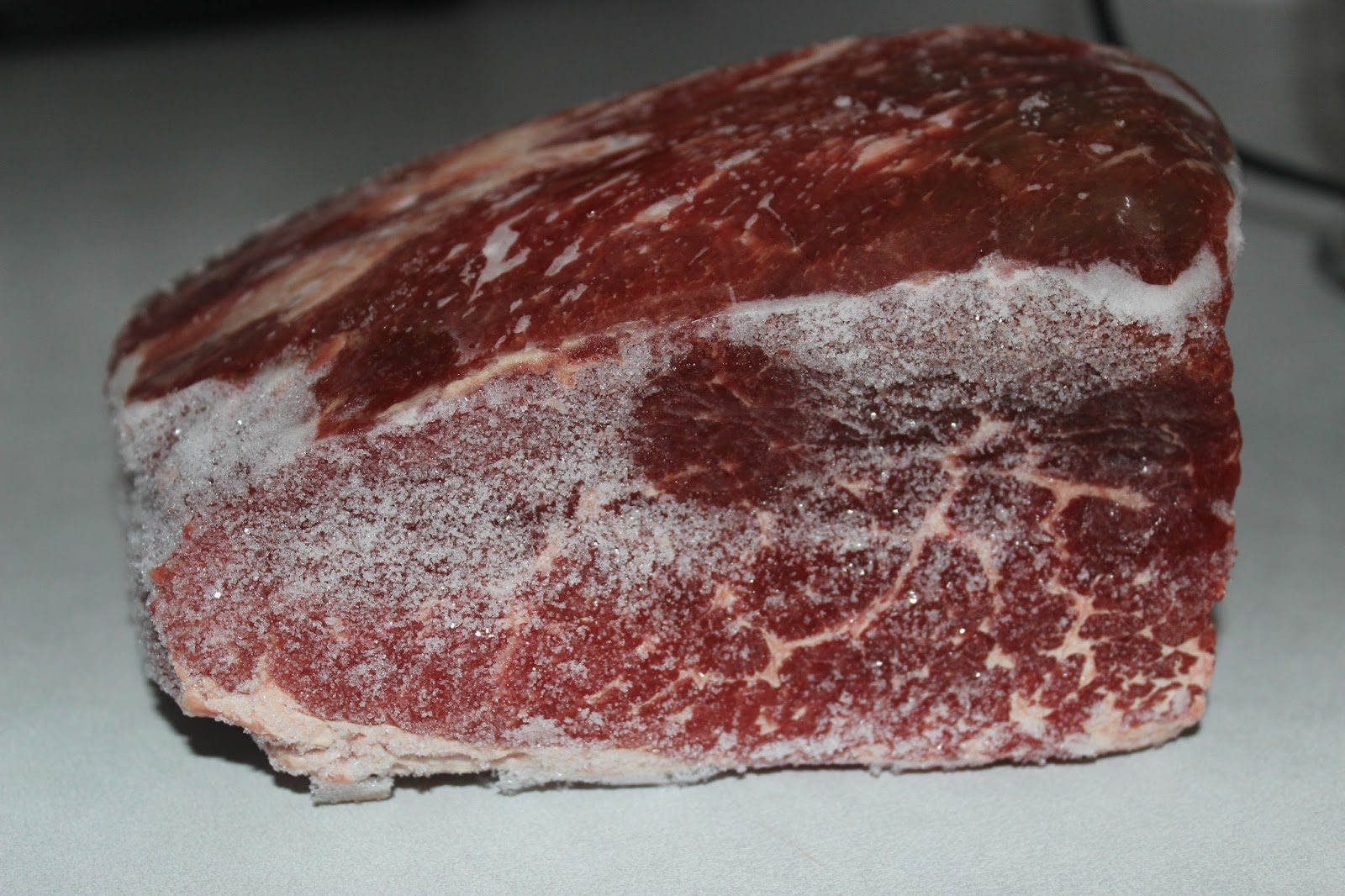
What Makes Beef Tough?

I have had to buy -- or should I say have chosen to buy some meat from the store lately. Roasts in particular as we are out and I refuse to buy lunch meat loaded with chemicals and a fake flavor. The scary thing is I bought some chuck steak to cook roast like for lunch meat and the stuff increased in size instead of shrunk -- scary! What are they putting in our meat these days? Since the fox cheated us out of some chicken, we have purchased a little of that also. We don't eat much store chicken anymore and interestingly our cholesterol levels are lower than they have been in many, many years. Makes me wonder what they put in them? Motivation to do our own crops up everywhere. Much easier when you are feeding 2 but with the grandkids here most of the week it is 6, making it a much more difficult task.


As I walk the isles on sale day, I notice the only roast in my budget are the tougher cuts. Good thing I like them and know how to cook them to a tender point. The cooking of tougher cuts of beef, pork, and lamb and wild game is the same. We have eaten lots of wild game, yak, and bison which all are cooked in the same manner.
I knew very little about meat and the various cuts until we began cutting our own. Before that I found the meat section of the store confusing. What cuts do you purchase to do what with? In this confusion you might have had a very chewy meat experience because the cut was cooked wrong. Yes, there is some meat that no matter what you do it will be tough but with this meat there can be a flavorful broth made. You just don't want to pay 6 dollars a pound and have something not chewable when you are done. My mom was a pro at cooking a roast to the tough leather stage. She cooked it at too high a temperature, without enough moisture and for too short a period of time. Of course it was a tougher cut of meat to start with.


https://www.angus.org/pub/beefchart.pdf is a great site to see just where different cuts of meat come from. What we learned when we started cutting up our own beef was that you could get different cuts from the same section of beef. Customizing is a great lure of do it yourselfers. For instance, pork chops is the cut from which Canadian Bacon also comes from. Either you cut a little of the section for chops and make Canadian Bacon from the rest or you choose between the two. 


If you look at a beef, the top center of the beef and top of the hip is where the choice cuts come from, the loin, rib, sirloin etc., most of your steak cuts. Prices reflect this. The bottom section is where the animal gains its locomotion, hence, locomotion muscles. This is the hip and shoulder where the legs propel the animal forward. The top of the shoulder is where my favorite tougher cut comes from, Chuck. Chuck has the most awesome flavor. It is my absolute favorite beef meat and I will take it over T-bone steak any day.


There are other factors besides locomotive versus support muscles (the muscles that aren't locomotive muscles) that determine the tenderness of beef. They are Marbling, Stress, Feed, Aging, Slicing Across the Grain, Marinating, and Proper Cooking.
Marbling may be something you avoid because of fears of cholesterol. It is marbling though that gives meat a perceived tenderness because fat acts as a lubrication when chewing and aids in the separation of fibers. Fat lubricates between meat fibers making the fibers easier to pull apart giving those molars an easier time. Fat also stimulates the production of saliva which further stimulates taste. Fat also helps protect against over cooking. Don't avoid fat, just be smart about it and don't over eat.


Stress tightens the muscles and produces tough meat. Most animals travel a long distance to the butcher and if they are not left long enough in pens in order to relax some, then you taste the results. Our livestock die where they lived so they have no travel stress or stress from being corralled in a strange environment. They are placidly eating grain and then dead. It is that quick.


Feed plays a part in that corn fed beef is usually more tender because it increases fat levels and the animal gains weight quicker so it is butchered at a younger age. Younger animals are more tender. Our animals are closer to 2 years of age instead of 18 months. Pasture fed along with hay and a small amount of wheat is what ours eat. The increase in age gives us more natural flavor and because of the relaxed environment, taste testers have all chorused saying the meat is tender. My cousin and her husband came and had steaks with us but complained about how large they were thinking they could never eat it all. To their surprise they devoured it. They buy a half a corn fed beef every year but had not tasted anything quite as good as our beef. Feed choices equates to different flavors and different people like different flavors. In lamb this is especially true as it feed makes a large difference in flavor.


Our favorite beef is Coriante but they are not fun to keep in as they are wonderers by trait and they are much slower growing. This means lots more feed to meat ratio and time, lots more time to get to butcher size. Unless you have mild year round weather so little hay is need plus lots of pasture, it just isn't real cost effective. We bought a good sized Corianted to begin with and may do that again one day because I'm craving it. We eat mostly Angus since it is readily available. That is what will go into the freezer this year and a Angus /Semental calf that will grow and do the same.
 

Aging, marinating, proper cooking, and slicing across the grain, all help to tenderize meat. There are two kinds of aging, wet and dry. We do only dry and our meat does not hang as long as traditional corn fed beef. Diet plays a role here as does time in order to be able to process the beef. We have to coincide our hanging time with days off in order to get the job done - not necessarily when it is best for the meat. Yet we have been blessed with very tender beef. Dry aging does not work well on pork, lamb, and veal as they do not have the marbling to protect the meat from rotting. Corn fed beef can be aged longer because of the increased fat levels. I have to say our pasture, hay fed are not any less fat but they are babied. Most of you don't process your own meat so I won't go into aging. Marinating and cooking I will talk about in another post.


That leaves slicing across grain. That makes a huge difference as it cuts up the connective tissues in the meat. Fibers in the meat run in a direction. You cut in the opposite direction that the fibers run in order to break up the connective tissue. We cube a lot of our meat, almost all of our wild meat. We have a cuber that has knives that cut through the meat tenderizing it. Unlike the butcher or store meat that runs the meat through once. We run ours through from top to bottom and flip it so it runs through side to side so it gets really tenderized. Great if you have sever TMJ like I do. I have no trouble with mine but the dentist cringes when he works on my teeth.