Tuesday, June 13, 2017
A Hen's Eggs Change Color
In pondering about how to set up a chicken record chart that will tell me whether or not I'm reaching my goals on how to save time, and money; I've learned an interesting fact. A hen's eggs become lighter in color as her laying cycle advances. I have an Australorp hen and a Rhode Island hen who are both two and just started up laying again. Good thing because I was going to put them in the stew pot if they didn't get a move on. Indeed their eggs are much darker than the majority. I have a couple, I'm guessing, that are at the end of their laying cycle because the eggs are very pale. This works great because I have hens that though they are not all the same breed, they do lay about the same shade of brown egg when they are at the same time of their cycle. If your eggs are all white then it is pretty hard to tell a white egg from a whiter egg.
But if you know what hen lays what egg which is easiest if you only have a few hens, then you can keep track. Of course that only works if you camp out and collect eggs as they are laid and the egg shape is distinct. I don't have all day to do that and I'm sure you don't either. But there is that chance that comes once in a while where you peg a hen for the unique egg shape she lays.
That is why I want to build nesting boxes again. The last ones were for normal hens and only a few would bother to squeeze in. Hens use the same nests each time so that would narrow down the number of hens I'm watching in a particular nest. Also an interesting fact. Hens lay in a twenty-five to twenty-six hour cycle. Which means they lay later and later in the day until the circle comes back to morning again. That I have definitely noticed. Easiest to do when you hens do not all look alike.
Look at the difference in the color of eggs. No, I do not have a hen that lays white eggs. I'd guess she is just about ready to molt. The one on the left won't be too far behind and the one on the right is just getting started, either it is the Rhode Island Red or the Australorp.
I've also noticed that the same hens are on the nest almost every day. My two Australorps crossed with the mystery breed rooster are two of my prolific layers. There is one more of this cross but I need to check her out. I don't think she has every laid an egg. She is always just too pretty. 10 and a half pound Pearl looked this pretty and I had no idea until she died on me that she probably never laid an egg in her life. She is the one who started my research on being able to tell when in her egg laying cycle a hen is. It is those pale, pale legs and pretty feathers that has me suspicious about this one hen. I'm in the culling mood since the present work load is far too steep. Watch out girl you might just be on the chopping block next week. This girl was always going to become chicken noodle soup because she is quite light weight compared to her other relatives but I never got it done.Then this spring it was because I did not want to pass on her genetics. Does that happen to you. The not getting things done part? Now I'm desperate to lower my work load and financial drain on the budget. Great motivation.
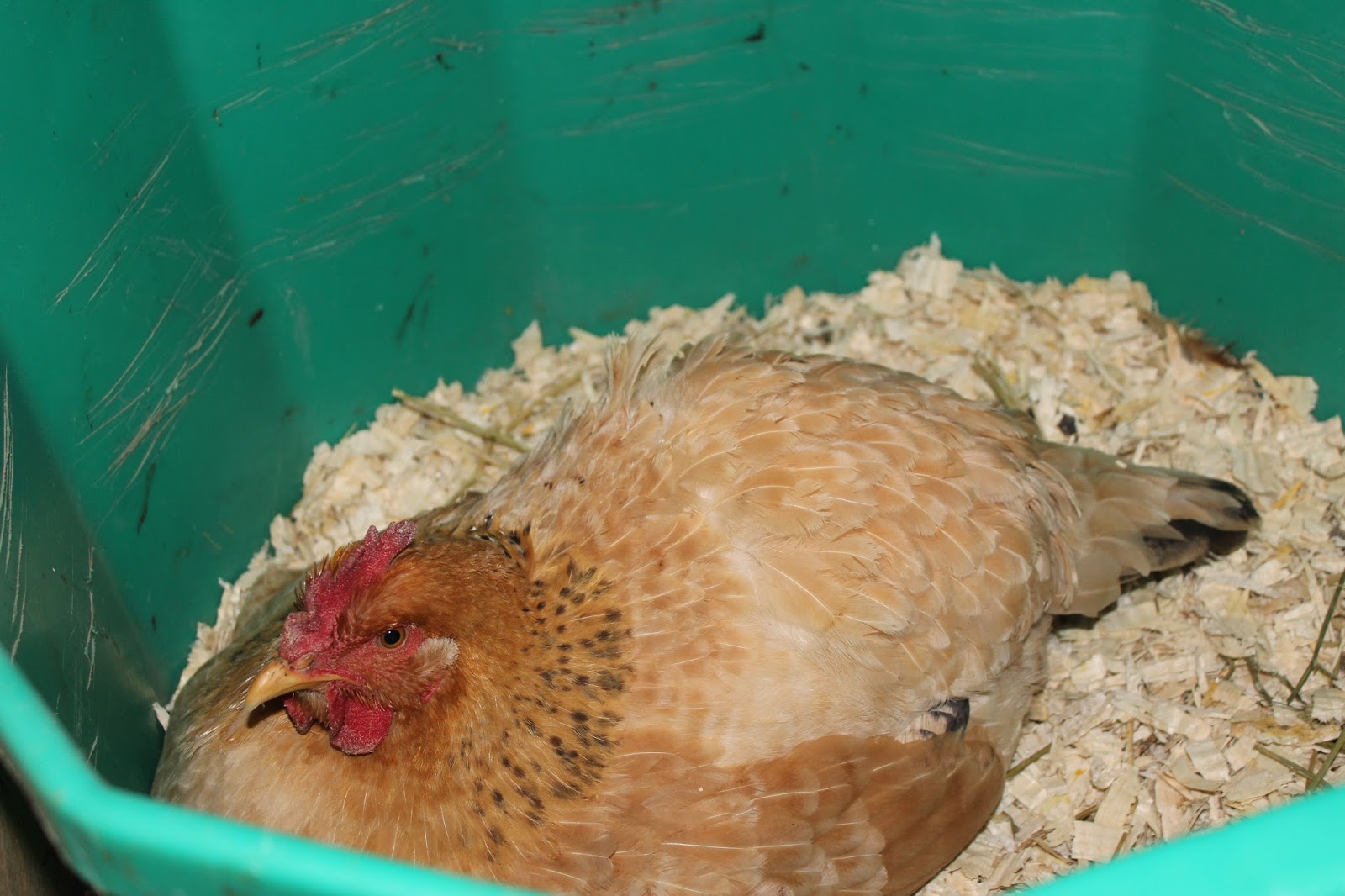
So that is what I plan on learning to do - keep track of who is laying, molting, and setting. The last one of course is easy. She sits there and hardly ever gets up. The tricky part is to figure out who is laying and not laying. I researched to have a more scientific idea on who that is. We'll talk more about what I've learned later. I want to try out the information on the girls first. That means nighty night so I can get up and check the girls while they are still on their perches. Easier to catch that way. I've got twelve to catch so if it takes me a couple or more days its okay. Just as long as the task gets done.
Labels:
chickens
Friday, May 19, 2017
Empty Udders
Udders are fifty percent of the linear appraisal score card or conformation points on a dairy goat. Makes sense since milk equals udder and it is a DAIRY goat. So since I have not blogged in a while and I am going crazy with end of the year school events and babies, babies, babies as our eight year old says. I thought I'd give you a brief lesson while I wait for the five year old granddaughter in the bathtub. Then it is clean stalls, feed the Nubian twins born last night once again, check on the baby bunnies and chicks being born, cook, and clean house. Oh yeah, and plant the baby pine trees that will hopefully grow and become a wonderful wind break to protect the north side of the house.
This is Comedy and she won her Permanent Championship in the ADGA association. Her strongest area is her udder. It is a gem! Wish I could show you it full BUT it does not presently get full -adjustment problems. She was set in her ways and then she arrived here where everything changed. We had to modify the milking stanchion to her liking, work out disagreements in social status among the herd, and figure out a feed she will eat. So far it is this one this night and that one another night or morning depending on the day. Her score card for us today must have been good since on the way to pasture she dodged and dived; bucked and leaped and maa...d with joy. With a great improvement in her emotions we hope the milk production follows. This girl when first freshened this year gave 2 gallons of milk and before she arrived she was milking 11 pounds morning and night. Now we are lucky to get 3/4's of a gallon a milking. It happens. The production will return next year if not in full this one.


So empty udder is the lesson today. The Nubian on the left is about the same age as Comedy. Note how much fuller Belle's udder is than Comedy on the right.
Belle has dense tissue in her udder. In a woman this puts her at a six times greater risk of developing breast cancer. Keep in mind there are all over dense breast and denser in a few areas type. Density makes it harder to detect cancer since it blends in. Belle has the dense in the top region but it is a good sized area. You don't hear of many goats getting udder cancer but you do hear a lot about mastitis which is harder to detect when there is a lot of tissue involved. Dense tissue takes up room and that is area milk will not be in. Hence same size udders can store quite a variance in the amount of milk. The same holds true for women. Breasts not udders in their case.
Belle had mastitis at one time before I bought her. I assumed the infection was treated immediately since I had pointed it out at an early stage. Obviously it was not since when I brought her home and milked her, I discovered a substantial rock hard knot. The entire one side of the udder can be lost to mastitis. The greater the amount of scar tissue, the less milk produced and stored. So the best udder is one which when empty is a wrinkled empty skin sack.
When you have your goats linear appraised, the judge scores them full and empty. When you milk tonight. Check your girls. Also feel to see if the udder is soft and supple, another thing scored. You don't want thick, tough skin. It doesn't stretch well.
So tell me. What have you got? No, I'm not referring to ;your personal breast tissue. But at your next mammogram be sure and ask. There are four different tests that can be run and which is best for you is in part determined by your breast density tissue. Keep your doctor on his toes. It is your life on the line.
So keep an eye on yourself but what I'm asking is that you to take a good look at your dairy cow or goat when you milk tonight. What kind of udder do they have?
This is Comedy and she won her Permanent Championship in the ADGA association. Her strongest area is her udder. It is a gem! Wish I could show you it full BUT it does not presently get full -adjustment problems. She was set in her ways and then she arrived here where everything changed. We had to modify the milking stanchion to her liking, work out disagreements in social status among the herd, and figure out a feed she will eat. So far it is this one this night and that one another night or morning depending on the day. Her score card for us today must have been good since on the way to pasture she dodged and dived; bucked and leaped and maa...d with joy. With a great improvement in her emotions we hope the milk production follows. This girl when first freshened this year gave 2 gallons of milk and before she arrived she was milking 11 pounds morning and night. Now we are lucky to get 3/4's of a gallon a milking. It happens. The production will return next year if not in full this one.
So empty udder is the lesson today. The Nubian on the left is about the same age as Comedy. Note how much fuller Belle's udder is than Comedy on the right.
Belle has dense tissue in her udder. In a woman this puts her at a six times greater risk of developing breast cancer. Keep in mind there are all over dense breast and denser in a few areas type. Density makes it harder to detect cancer since it blends in. Belle has the dense in the top region but it is a good sized area. You don't hear of many goats getting udder cancer but you do hear a lot about mastitis which is harder to detect when there is a lot of tissue involved. Dense tissue takes up room and that is area milk will not be in. Hence same size udders can store quite a variance in the amount of milk. The same holds true for women. Breasts not udders in their case.
Belle had mastitis at one time before I bought her. I assumed the infection was treated immediately since I had pointed it out at an early stage. Obviously it was not since when I brought her home and milked her, I discovered a substantial rock hard knot. The entire one side of the udder can be lost to mastitis. The greater the amount of scar tissue, the less milk produced and stored. So the best udder is one which when empty is a wrinkled empty skin sack.
When you have your goats linear appraised, the judge scores them full and empty. When you milk tonight. Check your girls. Also feel to see if the udder is soft and supple, another thing scored. You don't want thick, tough skin. It doesn't stretch well.
So tell me. What have you got? No, I'm not referring to ;your personal breast tissue. But at your next mammogram be sure and ask. There are four different tests that can be run and which is best for you is in part determined by your breast density tissue. Keep your doctor on his toes. It is your life on the line.
So keep an eye on yourself but what I'm asking is that you to take a good look at your dairy cow or goat when you milk tonight. What kind of udder do they have?
Wednesday, April 19, 2017
Homemade Mustard
One of my goals this year is to learn to make the condiments I use most. That means mustard, ketchup, barbecue sauce, and mayonnaise. Then I want to go a step further and grow as much of the ingredients as possible. Of course not all in one year's time. It will be an ongoing project for years to come. I have grown brown and white mustard seed one summer three years ago but the harvest wasn't great. My first mistake was putting the seed in the not so fertile old garden. I plan on doing that again this summer. Not the putting it in the old garden but in growing a new crop. Then if all goes well I need to work on a screen that separates the seeds and the chaff. The brown mustard seeds are much smaller than the white and that might create the need for two screens. Then of course I need to come up with a good mustard mixture or two or three if lucky.
Right now I have just one Ball Park Mustard mixture that I'm not real happy with. It has too much of a bite to it and my tongue gets hung up on the heat and can't find the flavor. It is a problem I have with many peppers and sauces made with them. And yes, mustard has the same hot stuff that peppers have in them so while hubby and our oldest daughter's tongues are finding a wonderful melody in many sauces, mine just screams FIRE!!! It must be a taste bud thing.
That is my problem with this mustard recipe. I mixed in a little sugar and a little more salt after three weeks of it sitting on the counter but it still is hot. I'm going to do a little more research and tweak the batch once more. Then I think I'll mix another batch up. Was it cold water or was it hot that I'm suppose to use to cool down the heat. I've forgotten but it make a difference I'm told. Plus aging on the counter top versus in the refrigerator changes the heat too. After that is tamed then maybe I can taste the other ingredients and find that melody the family talks about but eludes me. When I get that far I can play with brown mustard and white mustard combinations. There is black mustard too but I'll probably never get that far.
I started with a mustard powder with this recipe. But to be self-sufficient, I need to move on to grinding it myself. Hmmmmm.... how can I do that with the equipment I have on hand? Would we like a crushed method better? That would be easier to achieve? So many questions and as yet, no answers.
But a girl has to start somewhere so Ball Park it is. The mustard of my youth.
So far the Ball Park Mustard recipe doesn't resemble Ball Park I've ever tasted but that could be my fault. I don't know what I'm doing.
One thing I know for certain is making mustard was eezy peezy when you buy the powder and I will work from there.
Meanwhile I'll keep hoping the vinegar in the pantry does its thing and I can use it in up coming mustard mixtures. But for now my goal is simply to create a batch of mustard that turns out better than my first.
An added bonus is that mustard is in the Brassicas family and inhibits the growth of existing cancer cells and prevents them from forming. Surprising how many anti cancer things I'm finding that were a common table fair of our ancestors.
Right now I have just one Ball Park Mustard mixture that I'm not real happy with. It has too much of a bite to it and my tongue gets hung up on the heat and can't find the flavor. It is a problem I have with many peppers and sauces made with them. And yes, mustard has the same hot stuff that peppers have in them so while hubby and our oldest daughter's tongues are finding a wonderful melody in many sauces, mine just screams FIRE!!! It must be a taste bud thing.
That is my problem with this mustard recipe. I mixed in a little sugar and a little more salt after three weeks of it sitting on the counter but it still is hot. I'm going to do a little more research and tweak the batch once more. Then I think I'll mix another batch up. Was it cold water or was it hot that I'm suppose to use to cool down the heat. I've forgotten but it make a difference I'm told. Plus aging on the counter top versus in the refrigerator changes the heat too. After that is tamed then maybe I can taste the other ingredients and find that melody the family talks about but eludes me. When I get that far I can play with brown mustard and white mustard combinations. There is black mustard too but I'll probably never get that far.
I started with a mustard powder with this recipe. But to be self-sufficient, I need to move on to grinding it myself. Hmmmmm.... how can I do that with the equipment I have on hand? Would we like a crushed method better? That would be easier to achieve? So many questions and as yet, no answers.
I do know I want to use mustard more in cooking. Not just on hamburgers but in cream sauces or in soups or ..... I don't know yet. My only familiarity with mustard is Ball Park, honey mustard, or Dijon needs expanding. Yes, I'm really mustard naive.
But a girl has to start somewhere so Ball Park it is. The mustard of my youth.
So far the Ball Park Mustard recipe doesn't resemble Ball Park I've ever tasted but that could be my fault. I don't know what I'm doing.
One thing I know for certain is making mustard was eezy peezy when you buy the powder and I will work from there.
Meanwhile I'll keep hoping the vinegar in the pantry does its thing and I can use it in up coming mustard mixtures. But for now my goal is simply to create a batch of mustard that turns out better than my first.
An added bonus is that mustard is in the Brassicas family and inhibits the growth of existing cancer cells and prevents them from forming. Surprising how many anti cancer things I'm finding that were a common table fair of our ancestors.
Monday, April 10, 2017
Lessons Learned the Hard Way.
"In all labor there is profit.", the saying goes. I learned a big one this spring. Last year I used the empty rabbit cages to put hens in when they became broody. Cardboard in the bottom and pine shavings and the hens were thrilled, happily remaining on her eggs until all eggs that were going to hatch, did. It worked great!
But then entered difficulties that accompany a daughter who has been diagnosed with cancer. Things at home did not get done and that included thinning the rabbit population. Hence, the great set up last year with using the rabbit cages was not available. No big deal right? I can just put the first two setters together in the small chicken coop. It is cozy, warm, and plenty of room for two to choose a nesting site. The food and water was nearby and I would be dealing with only one set up and not two in separate rabbit cages. The first few days worked great. Then the bossy hen on the left stole all the eggs from the hen on the right leaving her screaming at the top of her lungs in indignation. Not knowing which eggs were which, I had to leave them with bossy pants and turn the to be first time mama outside. The question then became whether the brown hen would sit on the eggs long enough to hatch them all since they were different ages.
Then a black hen decided to lay and with the Tulsa trip looming, I put her inside as well and crossed my fingers. While gone, our daughter complained that some of the eggs had begun to smell. I told her to hang in there, I'd be back shortly. Shortly turned in to six days and the whole time I was praying that the brown hen would not interrupt the black hen. I came home to a stinking coop and planned on doing something the next day when the brown hen hatched two chicks and was running all around in a tizzy worrying over them. She had forgotten the eggs she was suppose to be setting on. They were now cold and dead. Maybe it was my mood after a long week at Tulsa but I snatched up her chicks and shooed her out into the yard. The chicks I put under a heat lamp. I was in no mood to baby her when she had only 2.
The 2 chicks would not be alone for long since Australorps were due into the feed store any day. My Australorps did not come but ducks did. Now we had 2 ducks and 2 chicks, with Australorps joining them the next week and a couple days later four ducks. That was when I discovered two chicks running around with the black hen. She had abandoned her other eggs too. This set up definitely does not work. We now have quite the batch of mismatch ages of ducks and chicks. Its okay, they get along fine and a big lesson was learned - use the rabbit cages for broody hens. That is where the profit comes in - maybe not financially but I now know what does not work for us.
But then entered difficulties that accompany a daughter who has been diagnosed with cancer. Things at home did not get done and that included thinning the rabbit population. Hence, the great set up last year with using the rabbit cages was not available. No big deal right? I can just put the first two setters together in the small chicken coop. It is cozy, warm, and plenty of room for two to choose a nesting site. The food and water was nearby and I would be dealing with only one set up and not two in separate rabbit cages. The first few days worked great. Then the bossy hen on the left stole all the eggs from the hen on the right leaving her screaming at the top of her lungs in indignation. Not knowing which eggs were which, I had to leave them with bossy pants and turn the to be first time mama outside. The question then became whether the brown hen would sit on the eggs long enough to hatch them all since they were different ages.
Then a black hen decided to lay and with the Tulsa trip looming, I put her inside as well and crossed my fingers. While gone, our daughter complained that some of the eggs had begun to smell. I told her to hang in there, I'd be back shortly. Shortly turned in to six days and the whole time I was praying that the brown hen would not interrupt the black hen. I came home to a stinking coop and planned on doing something the next day when the brown hen hatched two chicks and was running all around in a tizzy worrying over them. She had forgotten the eggs she was suppose to be setting on. They were now cold and dead. Maybe it was my mood after a long week at Tulsa but I snatched up her chicks and shooed her out into the yard. The chicks I put under a heat lamp. I was in no mood to baby her when she had only 2.
The 2 chicks would not be alone for long since Australorps were due into the feed store any day. My Australorps did not come but ducks did. Now we had 2 ducks and 2 chicks, with Australorps joining them the next week and a couple days later four ducks. That was when I discovered two chicks running around with the black hen. She had abandoned her other eggs too. This set up definitely does not work. We now have quite the batch of mismatch ages of ducks and chicks. Its okay, they get along fine and a big lesson was learned - use the rabbit cages for broody hens. That is where the profit comes in - maybe not financially but I now know what does not work for us.
Labels:
chickens
Friday, March 17, 2017
What Plastics Are Safe?
"We know that, "BPA causes hormone disruption, reproduction harm, increased risk of certain cancers, malformation of organs in children, risk of miscarriage, sperm defects, and increased risk of mental disabilities in babies. 93% of 2517 urine samples from people older than six years old showed detectable levels of BPA." A survey conducted by the Centers for Disease Control
The research is conclusive in the area of BPA and simply put, it is toxic. But what most don't know is that most companies have replaced BPA with BPS, which is just another bisphenol.
{In the case of BPS, there's reason to believe it is just as dangerous to human health, and possibly more so, than BPA, although the research is not nearly as abundant just yet. Writing in the journal Toxicology In Vitro, researchers stated:ii
"In 2011, the European Commission has restricted the use of Bisphenol A in plastic infant feeding bottles. In a response to this restriction, Bisphenol S is now often used as a component of plastic substitutes for the production of babybottles. One of the major concerns leading to the restriction of Bisphenol A was its weak estrogenic activity. By using two highly standardised transactivation assays, we could demonstrate that the estrogenic activity of Bisphenol A and Bisphenol S is of a comparable potency."
Not only does BPS appear to have similar hormone-mimicking characteristics to BPA, but research suggests it is actually significantly less biodegradable, and more heat-stable and photo-resistant, than BPA. GreenMedInfo reports:
"... while regulators wait for manufacturers who promote their products with "BPA-Free!" stickers at the same moment that they infuse them with BPS to voluntarily reformulate,there isevidence now that BPS may actually have worse effects to environmental and human health, alike.."... BPS' relative inability to biodegrade indicates: 1) once it is absorbed into the human body, it may accumulate there for longer periods of time. 2) it is more likely to persist in the environment, making external exposures to it, and its many metabolites, much more likely than the faster degrading BPA. In other words, its potential to do harm will worsen along the axis of time, not lessen, which is a common argument made for the purported "safety" of BPA."}http://articles.mercola.com/sites/articles/archive/2012/06/20/bpa-free-plastic-still-toxic.aspx}
So what we have here is a switcheroo. One bad guy in exchange for another bad guy probably worse than the first. The whole BPA free campaign has millions of Americans making the switch but are we are no safer than before. Disturbing isn't it?
So once again here is an example of where we have to protect ourselves because no one else is going to do it. But how? How does one tell for sure if they have a BPA containing plastic?
This is what Mayo's says:
{A resin code of 7 appearing on plastic containers indicates that the container may be made of a BPA-containing plastic. It is a rounded triangle with a seven inside.
Some exploratory scientific studies have appeared in the public literature that have raised questions about the safety of ingesting the low levels of BPA that can migrate into food from food contact materials. To address these questions the National Toxicology Program, partnering with FDA’s NCTR, is carrying out in-depth studies to answer key questions and clarify uncertainties about BPA
The testing showed that more than 70 percent of the products released chemicals that acted like estrogen. And that was before they exposed the stuff to real-world conditions: simulated sunlight, dishwashing and microwaving, Bittner says. Then, you greatly increase the probability that you're going to get chemicals having estrogenic activity released," he says, adding that more than 95 percent
of the products tested positive after undergoing this sort of stress.The team concentrated on BPA-free baby bottles and water bottles, Bittner says, "and all of them released chemicals having estrogenic activity." Sometimes the BPA-free products had even more activity than products known to contain BPA.
"We've long cautioned consumers to avoid extreme heat and cooling for plastics, to discard scratched and worn plastics and we feel like this [study] validates one of our many concerns," she says.}
http://www.mayoclinic.org/healthy-lifestyle/nutrition-and-healthy-eating/expert-answers/bpa/faq-20058331
Some exploratory scientific studies have appeared in the public literature that have raised questions about the safety of ingesting the low levels of BPA that can migrate into food from food contact materials. To address these questions the National Toxicology Program, partnering with FDA’s NCTR, is carrying out in-depth studies to answer key questions and clarify uncertainties about BPA
The testing showed that more than 70 percent of the products released chemicals that acted like estrogen. And that was before they exposed the stuff to real-world conditions: simulated sunlight, dishwashing and microwaving, Bittner says. Then, you greatly increase the probability that you're going to get chemicals having estrogenic activity released," he says, adding that more than 95 percent
of the products tested positive after undergoing this sort of stress.The team concentrated on BPA-free baby bottles and water bottles, Bittner says, "and all of them released chemicals having estrogenic activity." Sometimes the BPA-free products had even more activity than products known to contain BPA.
"We've long cautioned consumers to avoid extreme heat and cooling for plastics, to discard scratched and worn plastics and we feel like this [study] validates one of our many concerns," she says.}
http://www.mayoclinic.org/healthy-lifestyle/nutrition-and-healthy-eating/expert-answers/bpa/faq-20058331
#5 Rubbermaid storage containers. Love these as the lids fit multiple sizes and they stack so nicely. I found the idea of Pinterest to use a tension rod to hold things in place in a drawer. LOVE IT!!
Here is a hint to whether a plastic may contain BPA. Hard plastic containers have a triangle with a number inside. If it is #3 or #7, it probably is made with BPA. Remember that heat, sunlight, or very cold temperatures causes greater release of BPA's in plastic so don't freeze or put plastics in the dishwasher.
The Green Guide, owned by The National Geographic Society devoted to greener living recommends plastics with the numbers #2, #4, and #5. I've just started checking in my own kitchen to see what numbers are lurking in my cupboards.
Another bad guy is Styrofoam.
This is what Green Guide has to say about it:
{Containers made of polystyrene (PS, or plastic #6, also known as Styrofoam) can also be dangerous, as its base component, styrene, has been associated with skin, eye and respiratory irritation, depression, fatigue, compromised kidney function, and central nervous system damage. Take-out restaurant orders often come in polystyrene containers, which also should be emptied into safer containers once you get them home.}
The Green Guide, owned by The National Geographic Society devoted to greener living recommends plastics with the numbers #2, #4, and #5. I've just started checking in my own kitchen to see what numbers are lurking in my cupboards.
Another bad guy is Styrofoam.
This is what Green Guide has to say about it:
{Containers made of polystyrene (PS, or plastic #6, also known as Styrofoam) can also be dangerous, as its base component, styrene, has been associated with skin, eye and respiratory irritation, depression, fatigue, compromised kidney function, and central nervous system damage. Take-out restaurant orders often come in polystyrene containers, which also should be emptied into safer containers once you get them home.}
Once again a tension rod used to hold things in place. This idea is especially nice with drink containers.
There is no way to eliminate plastics from our society and why should we? I think a more sensible approach is to limit where and how we use them. The next blog talks a bit more about this and I will show you another place where food manufacturers are hiding BPA. But meanwhile tell me, how many of you were surprised by this information? I sure was.
Labels:
food
Tuesday, March 14, 2017
The Birthing Process
Fresh milk!!! I am so excited. I can finally quit using frozen. Good thing because I'm about out. Yes, indeed Belle gave birth last Wednesday. Those of you who follow Easy Living the Hard Way Facebook page know this and have seen the photos but since this is an informational post, I've got lots to teach some of you. The rest of you can tell me if indeed this has been your experience.
But first let me introduce the oldest, a lovely young doe with great potential. She was born around two in the afternoon. The hour in which Belle had her first set of twins, five kidding seasons ago. Yes, a doe will normally have her kids within a three hour window of the first time she gives birth. If you know the day your doe bred and how many days that particular doe's gestation is, then you know when to head for the barn and keep a close eye out for possible complications. This has become more and more important as the years go by and my energy level keeps taking vacations. Getting up in the night for nothing makes getting up in the early morning to get grandkids off to school much more difficult than when I was young.
That means I have a tendency when possible to cull the night kidders. Two o'clock in the afternoon is perfect and that is just when Belle's had her first lovely little brown doe.
I was a little late for her arrival but hey, she was still all wet and slimy so it could not have been by more than a few minutes. I ran back for towels and the Betadine to do my job. I waited as mom and baby greeted each other and kept looking for the tell tale signs of the next arrival -- nothing. 'Well, this was getting ridiculous', I thought so I slipped under Belle and filled a baby bottle with colostrum. You can see there is no shortage of it. Look at that udder. I always make sure each kid gets as much colostrum as possible in them even if I am going to leave them to nurse their mother. The only way to accurately gauge that is to bottle feed them the first time. After that I can teach them to nurse or let nature take its course. Yeah, like I've ever really done that. LOL "What if they get too weak or one of the other kids pushes them aside." See, I just can't take the pressure so I interfere. No one seems to mind.
This particular doe I leave her to mother the little ones but she is not keen on nursing. She was not taught to by her first owner and it did not come natural to her. In fact she would not even mother her kids until she came to my house. I started to teach her to suckle her little ones but then I thought I would like to keep some of her offspring and bottle feeding alleviates weaning problems. My does will nurse forever if given a chance and the kids can slip through the tiniest holes to get their moms so no, I don't let any little ones I want to keep nurse. The other reason I bottle feed most of my kids is that they can go to new homes right away since feeding them does not require their mother. This gives me the milk I need for the kitchen.
As I gauged whether I was going to keep this little one, I kept looking for sign of Belle being uncomfortable and pawing the ground but she was relaxed and happy. Relaxed and happy is not what I needed. You don't have this size of an udder and sides sticking wa... y out for nothing on a hay diet. There had to more kids inside. Each of our does will follow a certain pattern year after year that is characteristic of her as an individual when she gives birth. There are odd years of course when the doe refuses to follow her set pattern but for the most part she will do the same thing year after year.
This particular doe I leave her to mother the little ones but she is not keen on nursing. She was not taught to by her first owner and it did not come natural to her. In fact she would not even mother her kids until she came to my house. I started to teach her to suckle her little ones but then I thought I would like to keep some of her offspring and bottle feeding alleviates weaning problems. My does will nurse forever if given a chance and the kids can slip through the tiniest holes to get their moms so no, I don't let any little ones I want to keep nurse. The other reason I bottle feed most of my kids is that they can go to new homes right away since feeding them does not require their mother. This gives me the milk I need for the kitchen.
As I gauged whether I was going to keep this little one, I kept looking for sign of Belle being uncomfortable and pawing the ground but she was relaxed and happy. Relaxed and happy is not what I needed. You don't have this size of an udder and sides sticking wa... y out for nothing on a hay diet. There had to more kids inside. Each of our does will follow a certain pattern year after year that is characteristic of her as an individual when she gives birth. There are odd years of course when the doe refuses to follow her set pattern but for the most part she will do the same thing year after year.
I decided to just watch and wait. I would on a younger doe pull the rest of the kids I knew were inside if she was in hard labor and they failed to appear within twenty or thirty minutes. That or labor was not progressing along meaning a possible breach birth or two kids who's legs were tangled near the opening. The reason is if you wait too long the kids will be dead. But Belle was comfortable and relaxed and this was not her first kidding season. Experience has taught me after thirty one years of delivering kids and a gut feeling born of, been there done that's. This felt right and so I bent down and filled a bottle as she stood licking her baby. Milking stimulates uterus contractions. Sneaky aren't I?
I've learned that with older does they often have a longer labor. More light labor in the beginning and a period of rest in between kids is common. More so between the first and second kid. The third follows shortly after. Patience is a virtue with these older girls. Sure enough, a little under an hour later Belle acted agitated and pawed the ground a few times and just three pushes later I saw.....
The water bag with two feed inside. They are the dark mass just below her tail. Three pushes and out came a strapping buck. Most of the time a water bag appears first and then the feet but not with this doe. Five minutes later and three pushes, out came a little doe looking like her mother. Belle was done, she had her triplets.
How did I know she was done? Three kids is the normal max for a dairy goat. I've only had one doe have four. Four is too many since a doe rarely has enough milk for that many. Besides there are the pushier kids that hog all the milk. If left alone one or two of them will die.You don't want four. I did not expect four and besides, Belle's sides were sunk in in an empty look.
Some does take a while to pass their after birth but Belle's began to appear shortly after. This is what it looks like. No water bag, and no feet sticking out. Nope -- notice the fibrous texture though. This is the placenta and it has little buttons inside. No, not buttons like the ones on your coat but round dark red solid tissue masses that they call buttons. When I would be in charge of a mare foaling for our neighbors, I was required to count the buttons to make sure the mare had not retained part of her placenta.
I admit, I never count the buttons in a goat's placenta. I have no idea how many there are suppose to be so how would I know if they are all there? The only thing I make sure of is that the goat does pass her placenta and hopefully in one long connected mass. It should of course be in proportion in size to the amount of kids it held. If it does not come out it putrefies. Big time infection. If ;your doe fails to pass hers within twelve hours I'd head to the vet for a Lutalyce shot. It will put the doe back into labor. She'll hate you but it is for her own good. How do I know this -- experience.
Don't be alarmed, when your doe bleeds a light amount after giving birth. This can last for a few days and sometimes slightly longer in goats that had a tough delivery. To slow and stop the flow on a doe who is in my opinion bleeding more than I'd lie, I milk more frequently. This naturally tightens back up the uterus, stopping the flow. The larger the uterus size due to multiple kids, the longer it takes for the uterus to shrink back to pre-pregnancy size. If there is an infection, the bloody discharge after birth will become a more maroon color, not a red blood color. It will be thicker, and have a nasty smell to it. Then she needs a penicillin shot, a few of them.
I've taught my does to hold still without restraint in the pen and I bend over at will to fill baby bottles right from the tap. Since I bottle feed four times a day, 6 am, 12 noon, 6 pm, and 10 pm, this is plenty enough to get things cramping. With triplets, for the first few days where there is only colostrum being produced, this method empties my doe's utter each feeding. If there is extra like there was with Belle, I freeze it just in case I need it for kids born to another doe. At night I am sure to drain the doe fully before heading to bed.
At five years of age, Belle was in light labor for several days after giving birth. She did not eat a great deal or drink much. Then on the third day, it abated and her milk began to come in. By the next day she was crying for relief in the morning. "Please milk me!!"
She gave 3/4 a gallon this morning and the same amount tonight. Impressive for a Nubian on her first day of her milk coming in. Her supply will steady increase for a while before leveling off. The second morning, this morning, she gave the same amount.
Remember, the more demand for milk, the more the doe will produce, within reason of course. This means milking three times a day produces more milk than milking twice a day and of course once a day. Milking frequently will up production but if sustained over a long period of time, this will decrease the longevity of your doe. Since I was gone much of yesterday, I only milked twice. Today, I will milk three times and give this poor girl some relief as her production should be greater yet.
Tuesday, February 28, 2017
I've Discovered Cutting Celery
Photo from Jonny's Seeds , one of the seed companies I order from.
Our goal to grow as much as possible of what we consume is challenging here where the growing season is short and cool. I'm finding this challenge quite often involves doing without or finding substitutes. One area I'm working on is celery. We do not use very much and though I've come up with better ways of storing it in the refrigerator, it still wants to go bad before we've consume it. Out to the rabbits it goes. Sadly this long storage time means the celery is depleted of nutrition and so it is rather wasted. So what is the solution since there are a few dishes I really like celery in?
Photo from Johnny's Seeds -- Celeriac
As I debated this question, I looked into growing celery in our garden, since we had a friend growing it about 25 miles from us. Alas, the weather and elevation are just different enough from there to here that it is not possible without a greenhouse. Yet it did not seem wise to take up our future greenhouse space to a plant that was only edible during the harvest time. Dried celery stalks to me are hard and woody. I've tried it.
Could there be another plant that tastes like celery but would grow here? I discovered Celeriac in a seed catalogue and gave it a try a couple summers ago. Nope, the tops were lovely but there was no bulbous root by the time Jack Frost came to end the gardening season. The seed packet said 90 days to harvest but our summers are not terribly warm and the sun goes down early being next to the mountains. Those two things put together equate to needing more days than the packet recommends. I'm not completely ready to give up on Celeriac though. Whether it be this year or next I will start plants indoors first and then transplant. Maybe that will work.
As I contemplated the what shall I substitute for celery dilemma once again, I happened to find Cutting Celery in a seed catalogue. (It is not a common thing offered.) The idea intrigued me. A celery that was grew more like parsley but had thicker stalks and an abundance of leaves. I decided to try this variety in the house under grow lights this winter. AWESOME!!! Though the stalks were smaller than the photo in the seed catalogue, it tastes wonderful. Then again the catalogues plant was grown outside and I think I spread the seeds too thick causing over crowding. I've divided the pot into two and I'm watering a little less as the leaves have brown spots. (I have a tendency to over water.)
Beware if you want to try this variety that the flavor of Cutting Celery is a slight bit stronger than traditional celery but not unpleasantly. I rather like the more intense taste. The ability to have it fresh, full of nutrition, and within reach of my kitchen counter makes this a permanent addition to our indoor gardening project. I can't wait to dry some and create ways to use it that way. I've got some ideas already. Celery salt comes to mind. I really like that stuff in potato salad, deviled eggs, and sandwich spreads. What if I dried Cutting Celery and added salt. The kind of salt that does not cause my tastes buds to disappear off my tongue leaving a sore spot. Yes, I'm allergic to the chemicals in highly processed salts.
If this works I can eliminated two things I presently buy, celery, and celery salt. A win, win!
Oh and by the way I'm still waiting on comments on what you want from my blogs in the future. Talk to me please.
Labels:
garden
Subscribe to:
Posts (Atom)